


Psychosocial Hazards at Work: What you need to know.
Psychosocial hazards are now one of the fastest-growing workplace health and safety risks in Australia. Safe Work Australia reports a 14.7 per cent rise in serious mental health injury claims in just one year, with 17,600 claims recorded in 2023–24. Mental health conditions now account for 12 per cent of all serious workers’ compensation claims, the highest level ever seen. These figures send a clear message: psychosocial hazards are no longer a side issue: they are a core OHS responsibility for every organisation.
What Are Psychosocial Hazards?
Psychosocial hazards are aspects of work that increase the risk of psychological injury or harm. They arise from the way work is designed, organised, managed, and experienced, particularly when demands consistently exceed a person’s capacity to cope or recover.
Common psychosocial hazards in Australian workplaces include:
- Excessive or sustained workload pressure
- Unclear, conflicting, or constantly changing roles
- Low job control or limited decision making autonomy
- Poor leadership support or ineffective supervision
- High emotional demands, conflict, or exposure to distressing situations
- Constant urgency, time pressure, or lack of recovery time.
Unlike one-off stressful events, psychosocial hazards typically operate over time. Clinical evidence shows prolonged exposure is associated with higher rates of burnout, anxiety, depression, cognitive fatigue, absenteeism, and turnover, as well as reduced focus and decision making quality which leaves with poor quality work, affecting the organisation.
Why Psychosocial Hazards Are an OHS Issue
Under Australian WHS legislation, employers have a duty to eliminate or minimise risks to psychological health, so far as reasonably practicable. Auditors now expect organisations to manage psychosocial hazards with the same severity applied to physical safety risks.
This means:
- Identifying psychosocial hazards
- Assessing the level of risk they pose
- Implementing controls at a systems and job design level
- Reviewing and improving those controls over time.
Importantly, good intentions are not enough. A supportive culture alone does not replace the need for clear systems, measurable indicators, and proactive risk management.
How to Identify Psychosocial Hazards in Your Workplace
Effective psychosocial risk management starts with visibility, not crisis response.
Organisations that identify risks early look beyond individual complaints and focus on patterns over time, such as:
- Chronic overtime or unsustainable workloads
- Frequent role changes without clarity or consultation
- High absenteeism, presenteeism, or staff turnover
- Increased conflict, errors, or performance issues
- Leaders reporting uncertainty about managing wellbeing concerns.
Key questions to ask include:
- Are workloads realistic and recoverable?
- Do people understand what is expected of them?
- Do leaders have the skills and confidence to support their teams?
The goal is not to eliminate all pressure, but to ensure work demands are designed and managed in a way that does not cause harm.
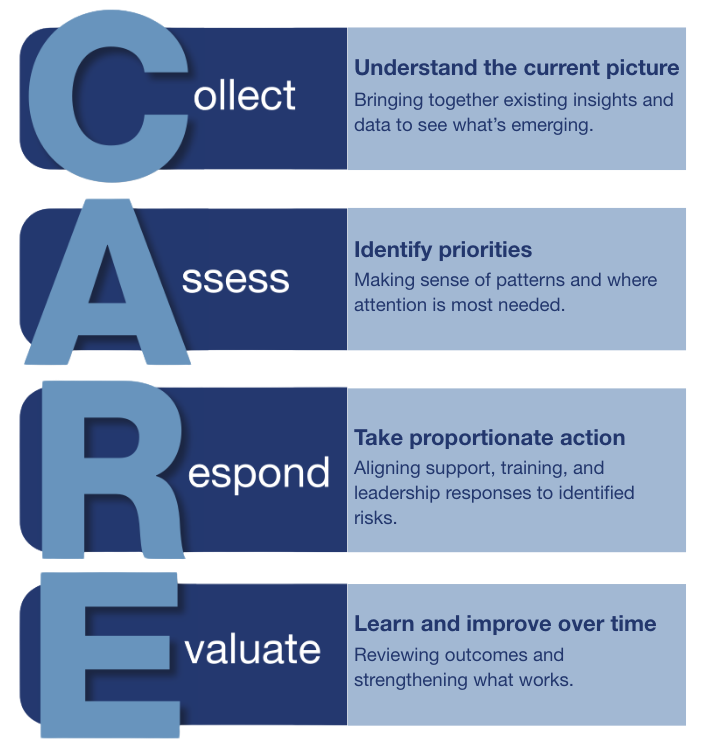
Turning Identification into Action
The most effective organisations treat psychosocial safety as part of normal business operations, not a reactive process.
This involves:
- Defining what “good” looks like: clear expectations around workload, role clarity, autonomy, and support
- Measuring meaningful indicators: such as workload sustainability, leave usage, turnover trends, and leadership capability
- Reviewing systems regularly: rather than waiting for complaints, injuries, or regulator involvement.
Measurement is the bridge between an aspirational wellbeing culture and a genuinely safe, high-performing workplace.
How AccessEAP Supports Psychosocial Hazard Management
Managing psychosocial hazards can feel complicated, especially when organisations are navigating new legislative expectations alongside competing operational demands.
AccessEAP helps organisations move beyond the jargon to make psychosocial risk management practical, proportionate, and achievable.
Our tools and services support organisations to:
- Translate WHS psychosocial obligations into clear, workable actions
- Equip leaders with the confidence and skills to identify and respond to risk early
- Provide clinically informed, evidence-based support to employees
- Shift from reactive responses to proactive prevention.
AccessEAP’s approach recognises that psychological safety is built through systems, leadership capability, and early support, not just crisis intervention.
Supporting People While Systems Improve
While strong job design and leadership are essential, people don’t need to wait for large-scale change to experience support.
Simple actions such as regular breaks, movement, task prioritisation, and early conversations when pressure is building, can make a meaningful difference day to day. These strategies don’t replace systemic controls, but they support recovery and resilience while broader improvements take place.
Moving Forward with Confidence
Psychosocial hazards are now a permanent part of the OHS landscape in Australia. Organisations that respond early and with clarity, structure, and evidence-based support are better positioned to protect their people and their performance.
If your organisation is looking to understand psychosocial hazards, meet legislative expectations, and support your workforce in a practical way, AccessEAP can help.
Get in touch with AccessEAP today:
https://www.accesseap.com.au/get-in-touch/