Our Structured Approach to Psychosocial Risk Management
Psychosocial risk rarely sits in one initiative. It emerges through how work is designed, led, and experienced over time.
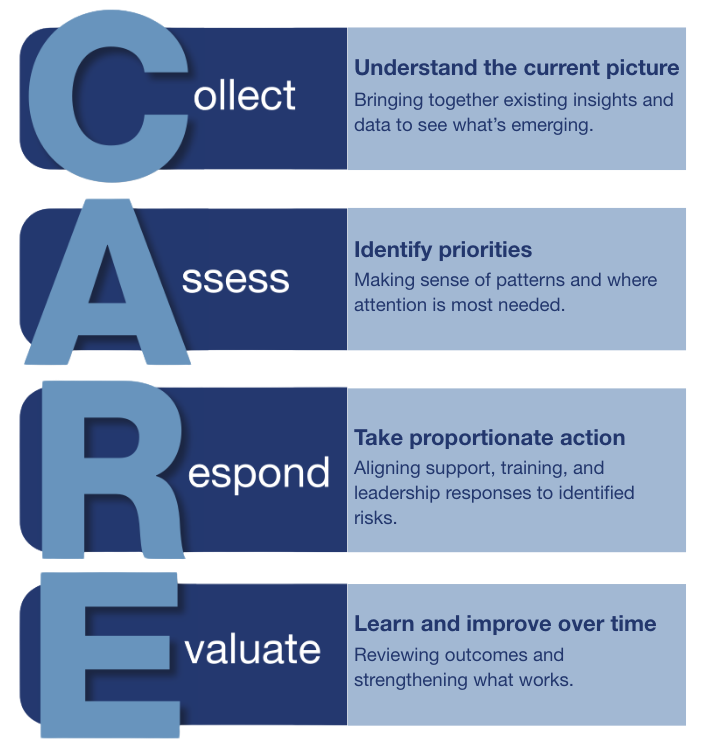
The CARE framework provides a structured way to understand the current approach, identify priorities, and respond proportionately.
CARE supports organisations to:
Bring visibility to emerging patterns
Clarify where responsibility sits
Align action across teams
Review and strengthen over time
If you’re navigating psychosocial risk and want a clearer way to understand and prioritise it, a discovery conversation with us can help explore your current context and priorities.
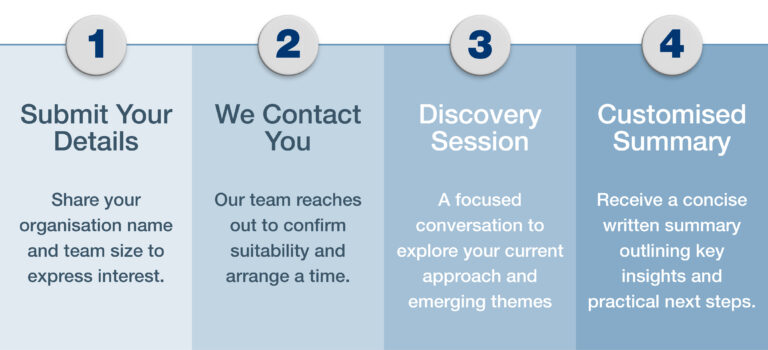
How the Discovery Session Works
Duringthe Session
We will go through:
How your psychosocial risk is currently understood and managed
Emerging themes or fragmentation across your initiatives
Proportionate next steps
Following the Session
You will get:
A customised written summary of key themes
Practical next considerations to support internal clarity
*This is a structured advisory discussion. It is not a legal compliance audit or certification.*
If a traumatic event has impacted your team, AccessEAP’s Critical Incident Response service provides urgent support. Our clinicians are available 24/7 to help your employees recover.